Amongst the many books, magazines, websites, and other materials I have read from over the past few months, these are the books I have completed reading cover to cover since my previous “book club” post in August.
THE GIFT
BY LEWIS HYDE
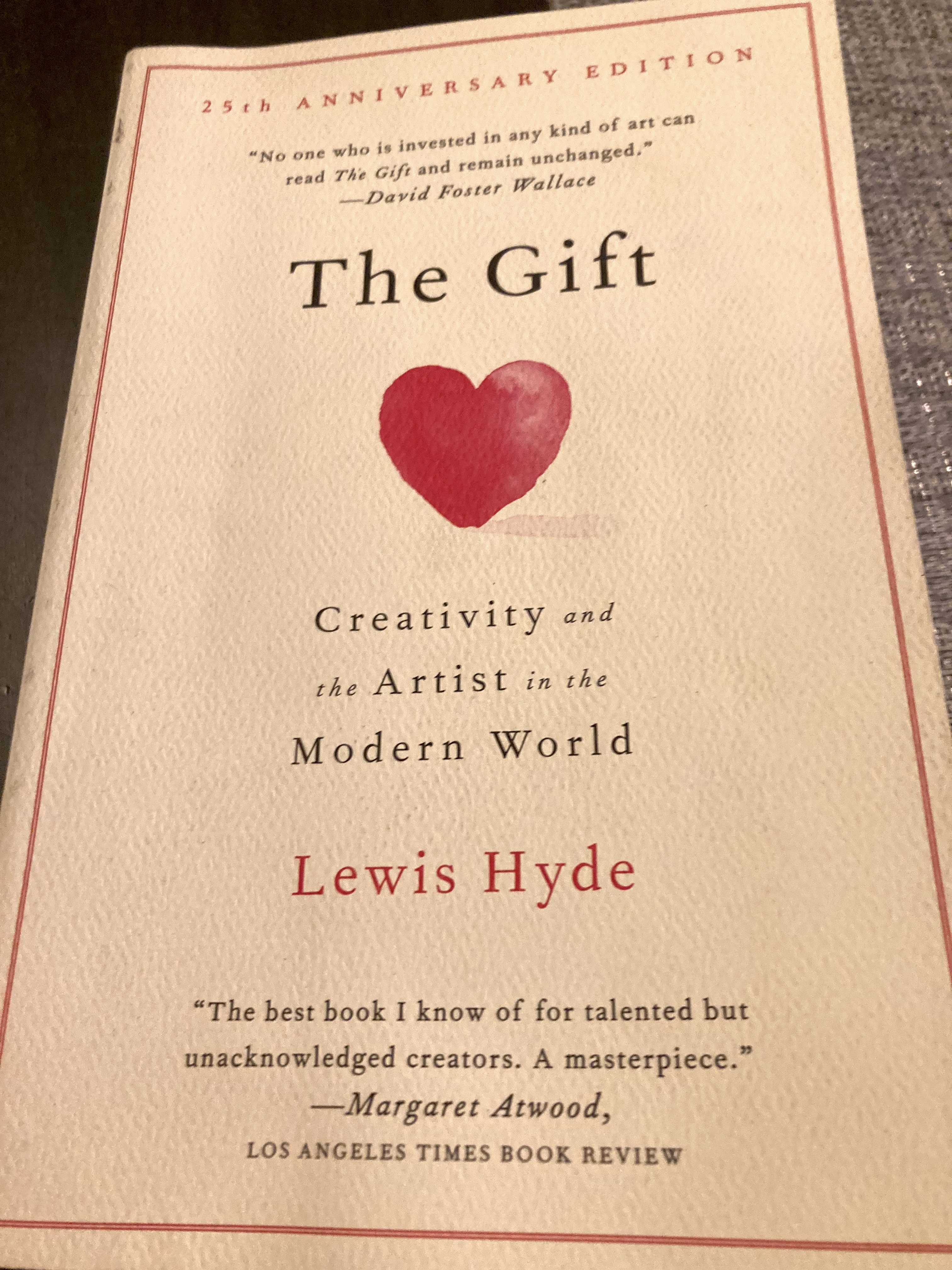
This was a very unusual book. For the first half, I was riveted. The ideas were fascinating, spanning millennia, part cultural anthropology and part art history, involving philosophy, politics, religion, and economics. I obsessed over these ideas and found myself reading it at every available moment. Then, the second half of the book was like a totally different book. Meh. Not very interesting, no real thesis or focus. It took a serious effort to finish.
The first half was about the concept of a “gift”, and the role of gifts in human cultures and economies over a broad span of time and differing cultures. Some of this felt like crucial, life or death stuff, like the section examining the economic history of gifts, loans, and common property rights. Before this I knew so little about property rights, interest rates, and the inter-connected economic, political, and religious factors that have reshaped the entire world over the past 500 years into a place that centers commerce over art and community. I wanted to tell everyone I spoke to about it.
But the second half of the book was much less compelling and it took me a very long time to get through. This was basically a series of essays on Walt Whitman and Ezra Pound, a pair of American poets from different eras in the 19th and 20th centuries whom I had heard of, but never read from, and the book did not make them very attractive or interesting to me. The author painted a picture of the complexities of their characters, almost in apology for some of the less-savory parts of them (such as Pound’s enthusiastic service to Fascism during World War 2). It felt like the author assumed that the reader must already be a fanatic lover of these two poets, as he clearly is, and that they clearly deserved the thorough analysis and tribute. But, for me, connections between the first and second halves of the book were tangential at best, and the book’s central focus was lost.
ROOTED IN LOVE
BY SIMON JAVAN OKELO

Part fictional tale, part true story, Rooted in Love is a tribute to One Vibe Africa, the not-for-profit mission of Simon Javan Okelo to bring arts & entertainment education to children in his hometown of Kisumu, Kenya.
The narrative portion envisions the experience of a fictional young lady growing up in Nairobi’s Kibera slums who comes to Kisumu to be a student at One Vibe Africa. The non-fiction portion tells the true story of Mr. Okelo and his organization’s many projects. It also features short bios on many of the participants in the Seattle-based Madaraka Festival, Madaraka Dinner series, and One Vibe’s Kenyan music festival held every year in Kisumu.
The book is filled with gorgeous photographs portraying the organizers, artists, volunteers, beneficiaries, and other participants in One Vibe’s work.
THE PRAYER OF THE VIRGIN MARY
UNKNOWN AUTHOR
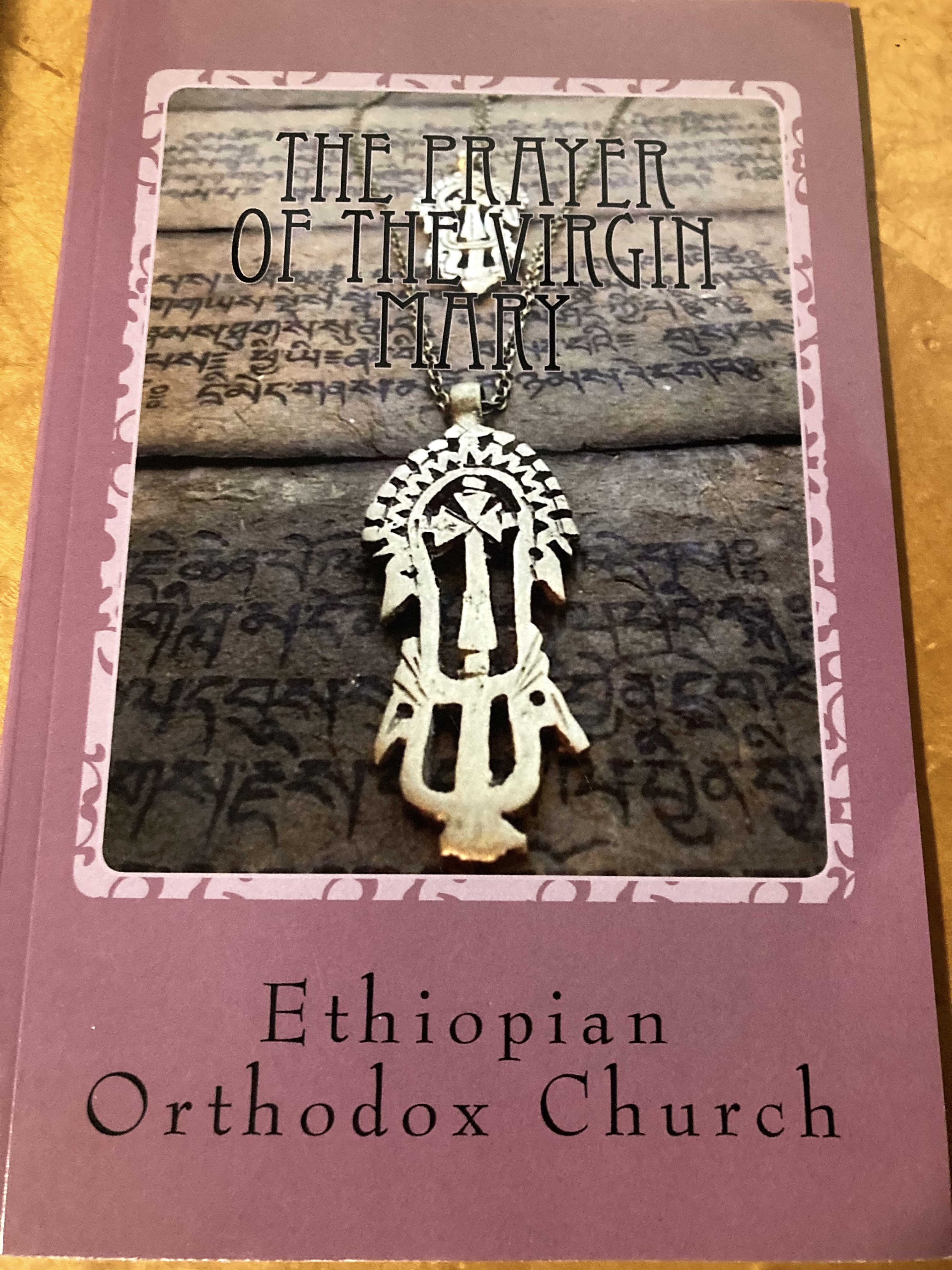
This book came with a very interesting story. Starting over a decade ago with the release of my documentary True Born African, I made the acquaintance of a woman named Barbara Makeda Blake-Hannah. She happens to have been the first Black television journalist in the UK, a Senator in the Jamaican parliament, and she is also–like me–a Rastafarian member of the Ethiopian Orthodox Church. We have recently collaborated on the production of an audio book for Wisemind Publications about Ras Sam Brown. Somewhere in conversation she mentioned that she had published two books of prayers, proceeds from which she passes on to the Church. I decided to order them both. But, I haven’t told the interesting part of the story yet.
When the book arrived, I was extremely curious. There are many prayers of the Virgin Mary used in the Ethiopian Orthodox Church and I wanted to know if this was going to be a version of the Wudase Maryam, the Malk of Maryam, or the Prayer of the Virgin Mary from Luke chapter 1. To my surprise, it was none of these. Inside the book is told the fascinating story of a Rastaman in the UK who spent several years “liberating” texts of Ethiopian origin from the private collections, universities, and museums of Britain–texts that had been previously stolen from Ethiopia during Britain’s various invasion attempts in the 19th century. The bulk of the book is the full text of one of these documents, in English translation.
The text itself is a fragment of what is known as “The Bandlet of Righteousness”, a semi-magical text that draws comparison to ancient Egyptian Books of the Dead. In fact, The Bandlet of Righteousness has been previously published as “The Ethiopian Book of the Dead”. This text combines Orthodox Christian-styled prayers with long, magical incantations of lists of names of God and the angels, accompanied by the promise that chanting these special words will bring the things asked for or change one’s fate. Because these transactions of words for rewards are seen to oppose the Biblical prohibitions on sorcery, I have learned, this text is not accepted by many priests of the Orthodox Church, though it has had a historical importance in Ethiopia, and has apparently had some recent significance to the Rastafari community in the United Kingdom.
ITATIONS PSALMS & PRAYERS
BY BARBARA MAKEDA BLAKE HANNAH
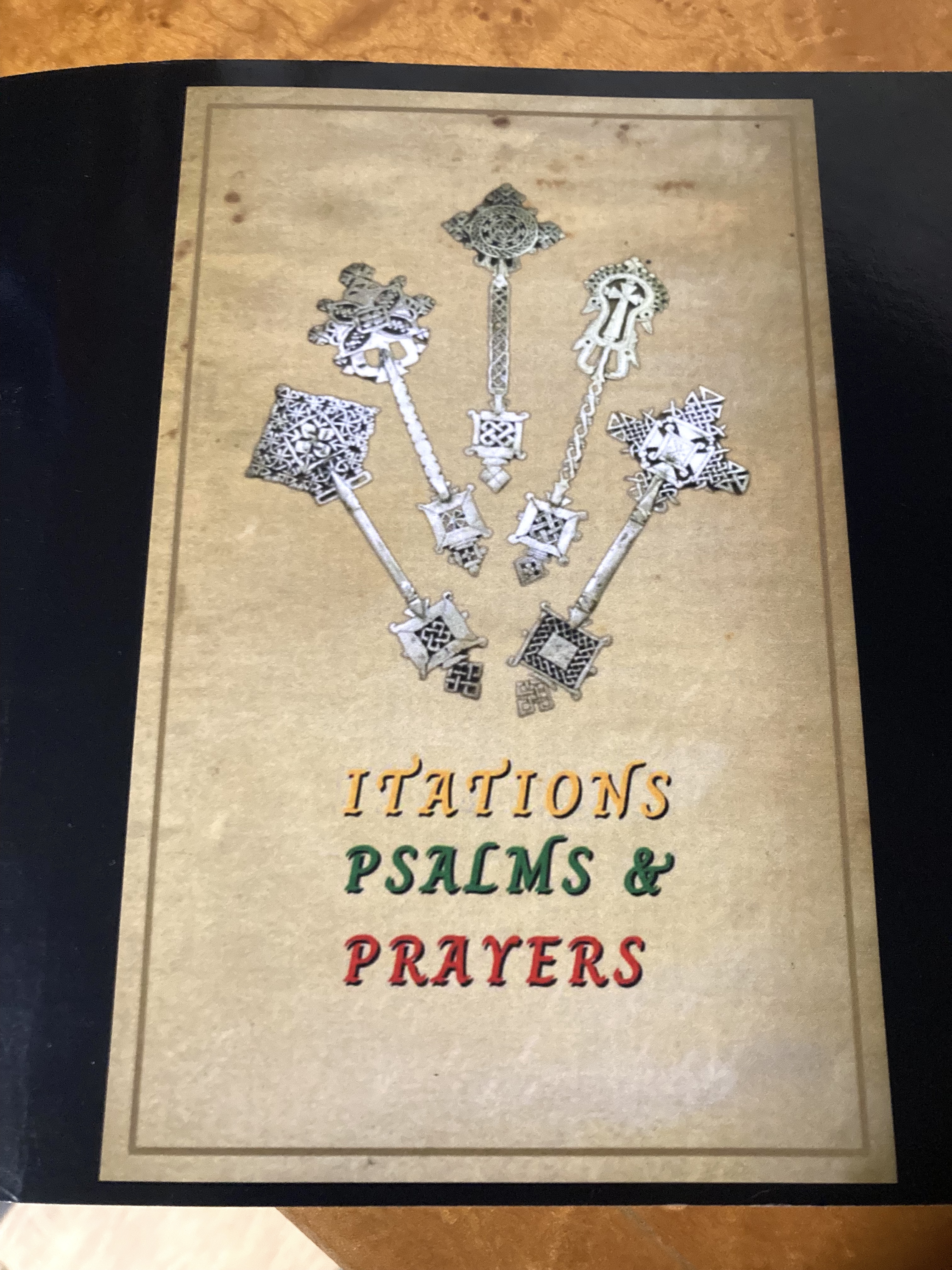
This was the second book that I ordered from Barbara Makeda Blake-Hannah, benefitting the Ethiopian Orthodox Tewahedo Church. It’s basically a compilation of prayerful “memes”, like you would see today posted on Instagram or Facebook. Each plate is a beautiful image–mostly flowers, Ethiopian Orthodox crosses, and portraits of Haile Selassie I– overlayed with a verse from the Psalms of David. There are 150 of these, one for each psalm in the Western canon.
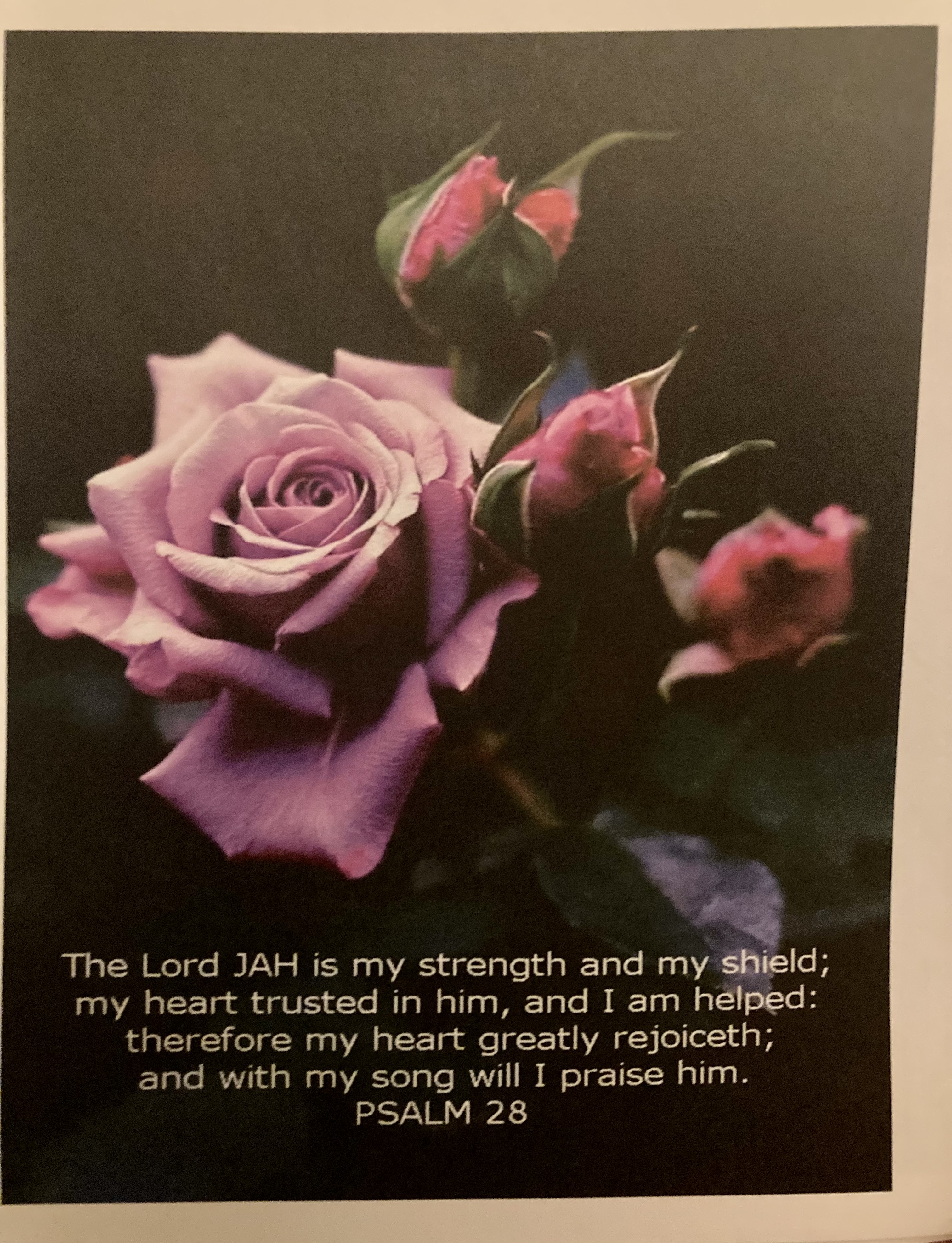

I would highly recommend this book as a daily reflection for uplifting consciousness through the appreciation of vibration-raising imagery and words of spiritual praise.
CONTEMPLATIONS ON THE TEN COMMANDMENTS, VOLUME 2
BY H.H. POPE SHENOUDA III
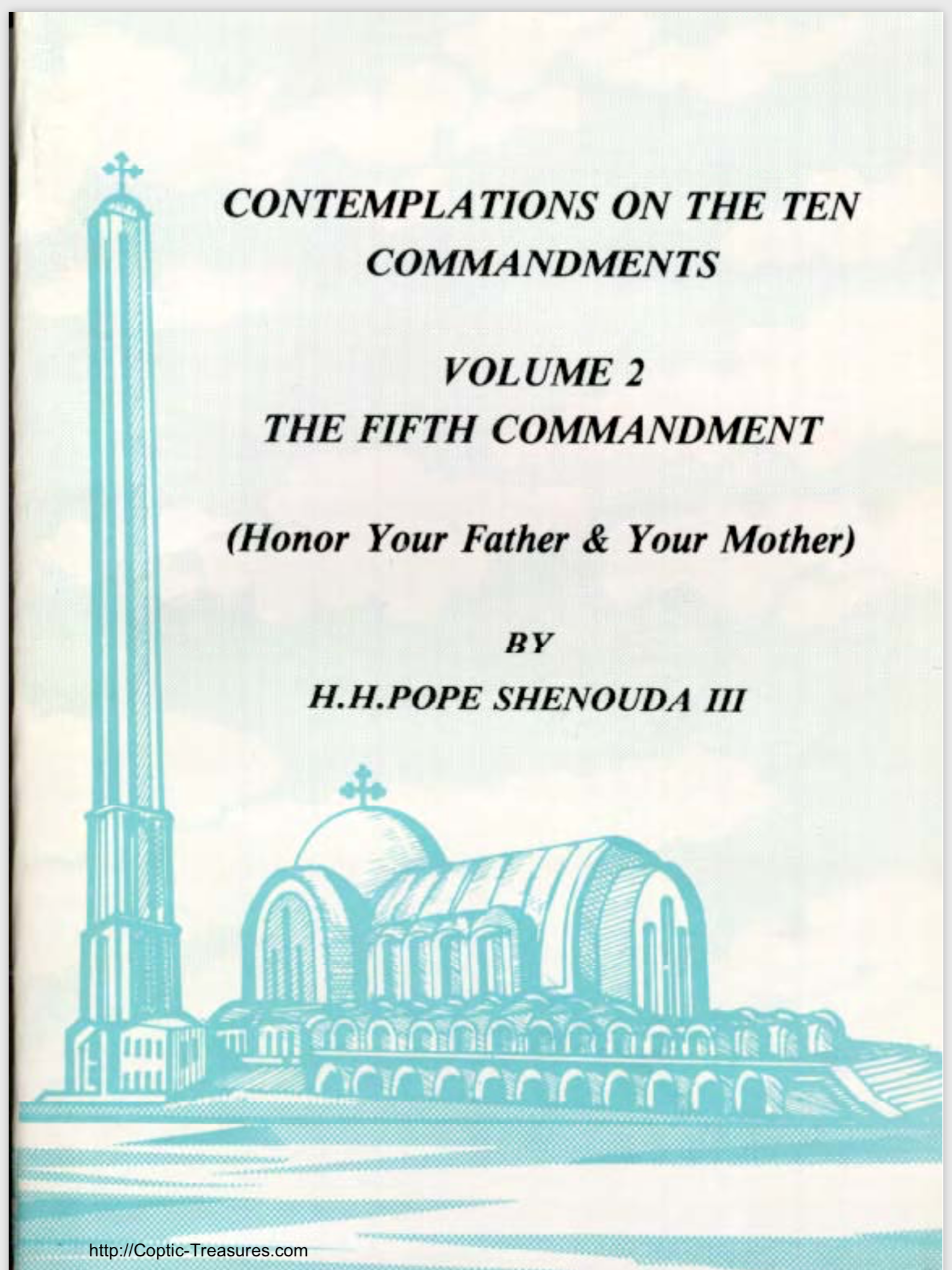
Since April, I have been teaching my Sunday school classes this series of 4 texts from the former Coptic Patriarch (Pope) of Alexandria. The first book covered the first 4 commandments and this book is 79 pages entirely devoted to the 5th commandment (Honor Your Father & Your Mother).
The books were assigned to me by the priest in charge of our Sunday School curriculum. Finding great value in them, I have extended the lessons so that over the past 8 months I have only completed 4 commandments and given a start to the 5th. This means that I have had many chances to read and re-read sections of the books. The 10 Commandments hold a great depth of wisdom, and these homilies from Pope Shenouda III, which have been transformed into books, highlight the breadth of meaning given to the commandments by Orthodox Christian interpretation.
One thing I must acknowledge is that I have had a poor track record with many of the commandments. I readily admit that I have been a severe commandment-breaker in the past, but it has been harder for me to admit that even after my change of heart, I have struggled to lead a moral life. The commandment that I have had the most difficulty with is this one–the 5th. I have been rebuked in my frequent re-reading of this book, and by teaching it to the children. As one of my former employers is fond of saying, “teaching completes the cycle of learning.” Now I am attempting to alter the ways I think about, speak about, and behave towards my parents–to release my bitterness and recognize the many blessings they have given me (and continue to give).
BLACK ELK SPEAKS
BY JOHN G. NEIHARDT
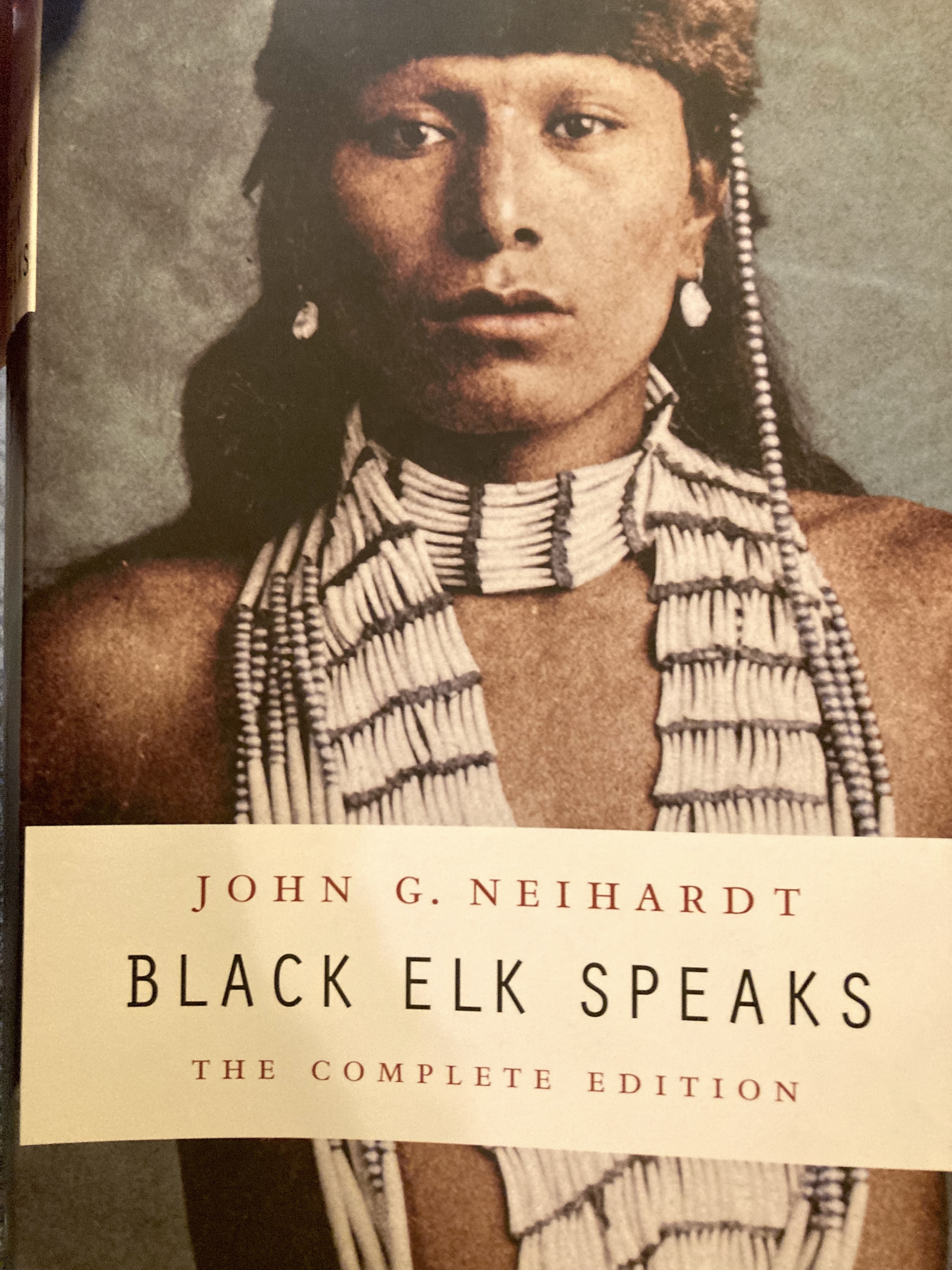
I drove out to South Dakota last year looking for a family connection. We have an old family legend, perhaps rooted in truth, that says my Grandmother’s Grandmother was a daughter of Tatanka Iyotake (Chief Sitting Bull). It shows up as a sliver of Native American DNA on my Father’s, mine, and both my sons’ 23andMe reports, as well as an out-of-place French name in my paternal Grandmother’s otherwise Anglo-American family genealogy papers. The name–Anne Maude Corbett–does not correlate to any of the documented descendants of the famous Lakota leader, but it does fit the pattern of French names taken by many of the Lakota Sioux.
Somewhat out of the blue last year, a friend of mine told me about the Lakota Sundance, which he attends each August in Rosebud, South Dakota. I decided–rather impulsively–that I would go. On my pilgrimage to Rosebud, I visited the Little Bighorn Battlefield National Monument, site of Custer’s Last Stand, and traveled through many of the lands of Montana, Wyoming, and South Dakota that I’d encountered in my research on Sitting Bull. During my week at the Sundance in Rosebud, however, I discovered that these Lakotas were not the same band he had hailed from (his people were the Hunkpapas up north at Standing Rock). While I had not gotten any closer to tracking my own family’s roots, I did meet many relatives from amongst my wider human family, and had a life-changing experience of keeping the sacred fire and cleansing in the sweat lodges.
After the trip, my father gave me a copy of this book. Inside, I discovered a modern masterpiece of spiritual vision. The collaboration between Nicholas Black Elk and John G. Neihardt, Nebraska’s poet laureate in perpetuity, beautifully synthesizes the world view of Black Elk with the poet’s artistry of words. It is a moving story of the Lakota medicine man’s life–which began in the traditional nomadic life of the Great Plains, experienced a saga of wars, massacres, and broken treaties, brought him across the seas to tour Europe in the traveling Wild West shows, and ended on the Pine Ridge Indian Reservation. The most powerful portions of the book are Black Elk’s visions, and the dances performed by himself and his people in order to act them out and bring them into reality through his life as a medicine man and leader.
This “complete edition” includes essays from Vine Deloria Jr., Raymond DeMallie, Alexis Petri, and Lori Utecht, as well as illustrations by Black Elk’s friend Standing Bear portraying many of the battles and vision-scenes described in the tale. While Black Elk did not live to see the impact of his vision on future generations, this book has gone on to influence many. In my experience at Rosebud, I have witnessed that the nation’s hoop is being repaired and the tree at the center is blossoming.
 Nic Nakis