Well, I’m on schedule with my Quarter 1 book reports blog. This time it’s not nearly as many books and periodicals as last time. I don’t know that my reading has slowed down that much, but I did travel a couple of times, and I’ve been working a few ‘slow reads’ (books I am in no hurry to finish, but want their lessons to settle-in), and flipping through ready reference books that aren’t really cover-to-cover reads (church books and gardening books mostly). I have 4 completed books here, and a report from the UN.
MAU MAU: AN AFRICAN CRUCIBLE
By Robert B. Edgerton

This book was horrifying. And all very true. Edgerton has created a thoroughly-researched and balanced account of what occurred in the British colonization of Kenya and the resulting Mau-Mau backlash, following the story through Kenya’s successful independence struggle, and the post-independence situation in which Mau-Mau veterans and their families were never properly recognized nor cared for, and their demands were never met.
I came into this story with a bias. I was firmly on the side of the Mau-Mau as African Liberation heroes. This is rooted in my groundings in the Rastafari movement, where Mau-Mau are seen as a type of founding figures for the global movement, and are lionized as African freedom fighters. It also comes from my early days trodding Rastafari, when I met many old dreadlocks men in the bush whom I was told were former Mau-Mau rebels that had never given up the fight. They treated me well, and I learned the general outline of the story of Rastafari (Haile Selassie I) and the history of African Liberation from them.
As I read the book, I came to understand that many other people (both Europeans and Africans) approach this story with a very different sort of bias. These are the ones who believe Mau-Mau to have been demons and terrorists. They have been raised on pro-British propaganda and unfavorable news stories.
Now–having carefully read Edgerton’s balanced and thorough journalistic account of the factors leading to Mau-Mau, the events of the rebellion and resulting State of Emergency, and the aftermath–I understand that both sides are partially right and partially wrong. The British (and other white settlers) were terrorists. They did everything the Nazis or the Ku Klux Klan would have done: the confiscation of land and wealth, the genocide, the manipulation of collaborators, the concentration camps, lynchings, and massacres. Their treatment of the African natives was relentlessly brutal and inhuman. The Mau-Mau were right to resist, to agitate for their land and their humanity to be returned to them. However, they were not moral heroes. The Mau-Mau were often also murderous and behaved as terrorists. Their crimes were committed not only against official colonial forces and collaborators, but also against one another, and against innocent Kenyans who attempted not to take sides.
In the end, their cause prevailed in Kenyan independence. However, their demands for land were not met. Their veterans were not given a pension by the new Kenyan government, and their widows were not given assistance, despite numerous pledges from Kenya’s new leaders. This is a sad and tragic story, with some heroism, but mostly a lot of gruesome inhumanity of man against man.
Here’s a little note I wrote regarding the central subject of conflict in the Mau-Mau uprising: land rights.
Land and Freedom
There is no freedom without land.
A person without land is in perpetual servitude to those with land, always living with a “real estate debt” or a physical-space deficit, which does not even give him a place to sit down and rest his head, unless he works in some capacity for the landed, paying rents to the land owners.
Even those with land are beholden to the city, county, state, or federal governments, which impose land taxes. If they do not pay their property taxes, they can have their lands taken away from them and be reduced to the status of the landless. So, even they must keep their land productive, or their labor productive, beyond the level of their own immediate needs, in order to pay the authorities and maintain possession of their lands.
These authorities are able to perpetuate this looming threat and extract these taxes in the name of services provided, chief of which is the provision of security through the presence of armed forces, such as the police or military. If you pay your taxes, that security is ostensibly in place to protect your property and person against threats. If you do not pay your taxes, you are then re-classed as the threat, and those same forces are used against you to remove you from your property. It is a giant extortion scheme.
This extortion scheme is maintained and justified by the tendency to evil of one man towards his brother. Due to an assumption of covetousness, and an assumed moral ethic of “might makes right”, people behave as if taking and holding something through force of violence is just as good as acquiring it on their own through honest means. Thus, one nation is always at threat of being invaded by another, therefore the armed forces must be maintained as protection.
At the end of the story, it is mankind’s tendency to covetousness and violence that makes men landed slaves to the state or landless slaves to the landholders. Our greed and lack of altruism allows some to own far more land than one could ever use or need, also possessing undue influence over the affairs of government and the application of its force, while another person owns nothing, has no influence, and is treated like a tramp, no better than a wild animal (maybe even worse).
GURAGE! GURAGE! GURAGE! THE STORY OF A WOLLO PRINCESS: WOIZERO YESHIMABET ALI ABAJIFAR
By Deena-Marie Beresford Ed.D.
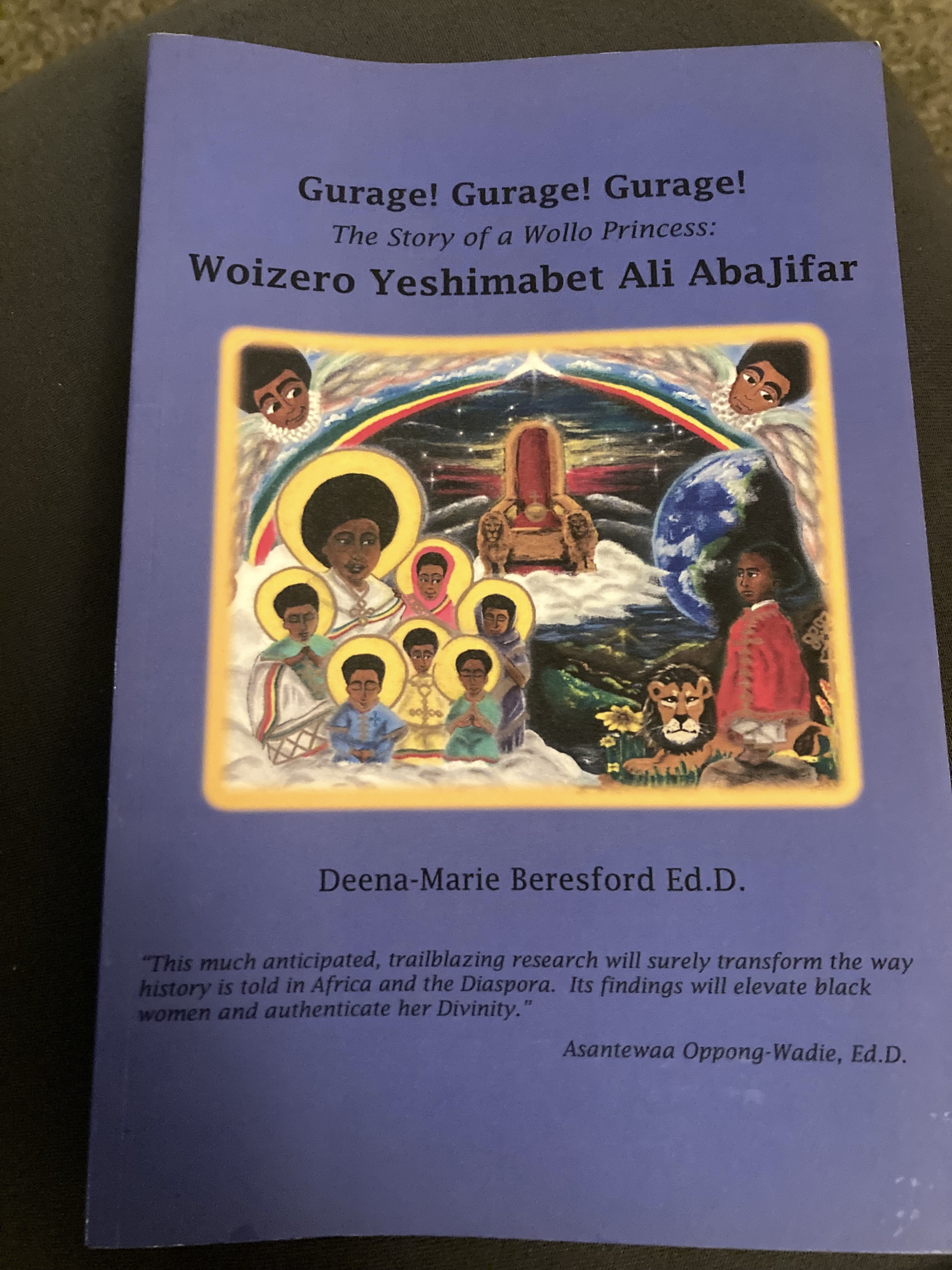
Another interesting book in the African History category. This one was written by Deena-Marie Beresford, also known as Mama Wolete, an acquaintance of mine through the International Development of Rastafari (IDOR) group, whose meetings I attend occasionally to reason upon the Selected Speeches of Haile Selassie I and African affairs.
Mama Wolete traveled to Ethiopia to research the little-known mother of Haile Selassie I, a woman named Woizero Yeshimabet Ali AbaJifar. For many decades, the identity of His Majesty’s mother was unknown, and since becoming public knowledge, many rumors and innuendos have circulated about her. Beresford provides some valuable insights into the woman’s family background personal biography that will help lay the ground for a factual discussion of her legacy.
However, I look at this book as merely a first draft. There are numerous formatting issues that make it difficult to follow the narrative through-line of the book and intelligibly process the information within. There are also many assertions made that are not backed up with reference citations. This leads one to question the source of some of the claims about Haile Selassie I and his mother. I believe this book can be improved and expanded to provide a credible academic source on Woizero Yeshimabet.
IPCC 2022, SUMMARY FOR POLICYMAKERS
P.R Shukla, J. Skea, A. Reisinger, R. Slade, R. Fradera, M. Pathak, A. Al Khourdajie, M. Belkacemi, R. van Diemen, A. Hasija, G. Lisboa, S. Luz, J. Malley, D. McCollum, S. Some, P. Vyas (eds.) IN: CLIMATE CHANGE 2022: MITIGATION OF CLIMATE CHANGE. CONTRIBUTION OF WORKING GROUP III TO THE SIXTH ASSESSMENT REPORT OF THE INTERGOVERNMENTAL PANEL ON CLIMATE CHANGE
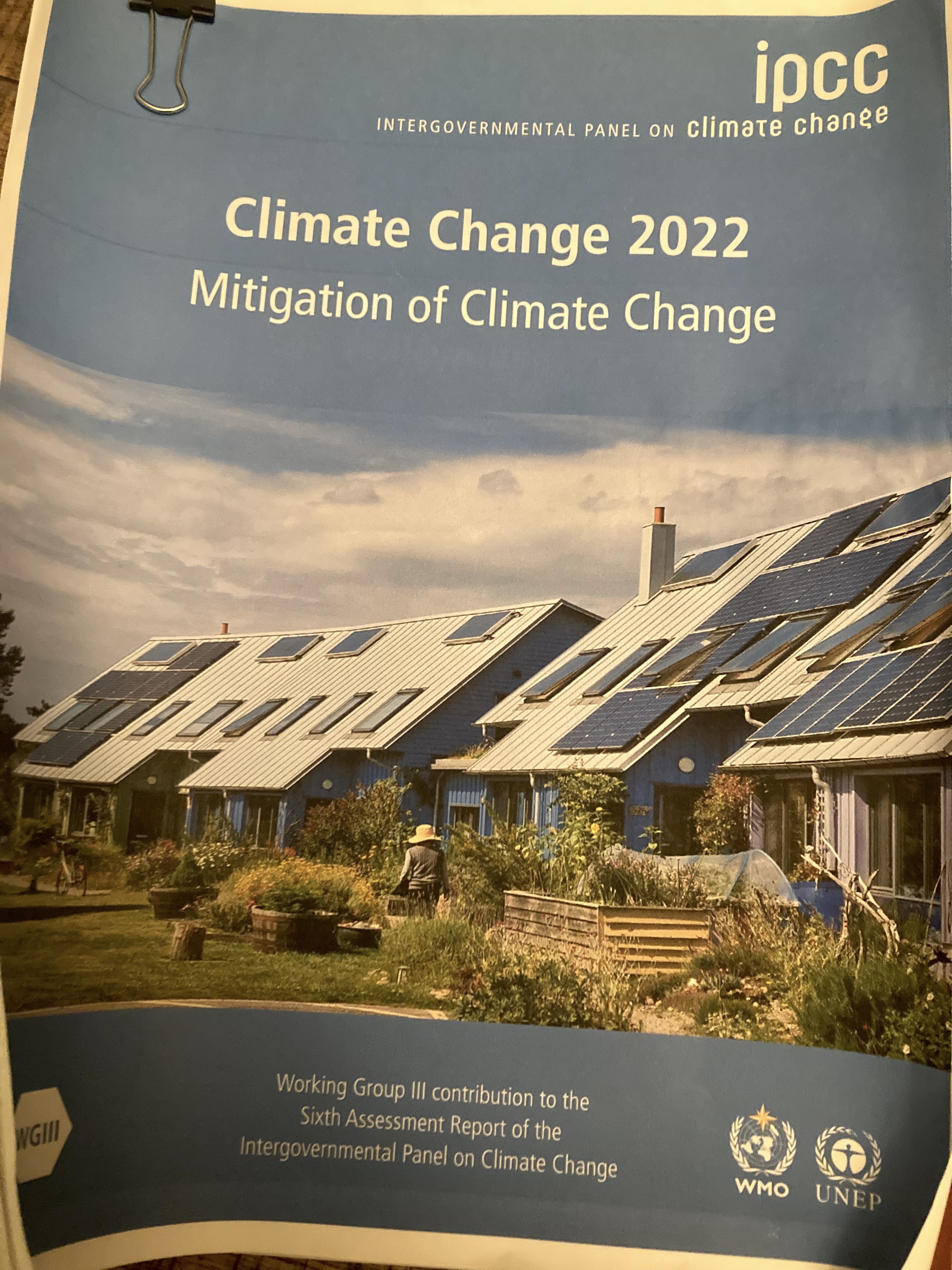
This was a lot, and I have a lot to say about it.
For two years I directed live TV broadcasts for the Skagit County Commissioners. This was a very interesting job that felt almost like returning to college for a Masters in public policy. I learned a lot about the day to day activities of civilian government. One of my favorite events was the biweekly Planning Commission meetings, where a volunteer group of appointed Commissioners considers proposals and tenders advice on countywide planning policy.
One topic before the Planning Commission at this time is the Skagit County Comprehensive Plan update process, and one of the issues being considered in this process is the topic of Climate Change, and how the County’s plan will proactively address future policy in that area. During one meeting, Commissioner Vincent Henley handed out copies of the IPCC 2022 Summary for Policymakers, an excerpt from the Contribution of Working Group III to the Sixth Assessment Report of the Intergovernmental Panel on Climate Change. Of course, I grabbed a copy for myself.
I have read the report twice and put together some of my own thoughts about what I think Skagit County can do to get on the right side of this issue, balancing a concern with taking appropriate, voluntary climate action, and avoiding any potential negative impacts of future “policy-from-on-high” (State, Federal, or Global government action) or litigation.
Thoughts on the IPCC report
Liberty depends on an educated population who can use that liberty wisely and to good ends .
If we’re afraid or at least cautious about the heavy hand of government power, then we must take upon ourselves the responsibility to take necessary action without compulsion by force.
My concern for the planet dictates that I make efforts to lower my footprint and to imagine or create a future where resources are conserved, and our earth is stewarded sustainably. If I don’t live that lifestyle and encourage others to make those changes, then the heavy hand of government will come in and make sure that they do.
My response after reading the WGIII Contribution to the Sixth Assessment Report of the IPCC, Summary for Policymakers.
1) I believe the climate science and have seen (witnessed) the negative effects human beings have on ecosystems and the long-term climate change associated with this:
- Glacial melt
- Shorter snowy seasons
- More extreme weather events
- Longer & more frequent wildfire seasons
- Impacts of sea-level rise on coastal cities and low-lying islands
- Desertification of urban areas
- Harmful deforestation impacts
2) I do not believe in the efficacy of centralized command-and-control mechanisms to address this problem.
3) Action must be based on collective, social, cultural vision and inspiration, to create systemic change as an entire cultural unit. We must see a future we desire, and cooperate with all available means–through voluntary activity–to pursue it.
4) Capitalism is highly inefficient at measuring & pricing the costs of negative externalities. Therefore, the government sector must play a role. This role is best when focused on removing barriers to access and innovation, and creating incentives to action. (See section E.5.2)
5) Not everyone who reads the report will feel the way that I do. There are others who will interpret the need to hamper development and consumption by North Americans, severely restrict our activities, and compel finance flows from us to other regions of the world. (See section E.4.1)
6) However, I see opportunities for Skagit County within the scenarios & projections contained within (as noted by Planning Commission Chair Tim Rashko highlighted in regards to forestry).
– Incentivize wind & solar on every home (small scale). (Sections C.4.2 & C.4.3)
– Strengthen the rural villages as areas to co-locate jobs and housing outside of the cities (reducing urban sprawl). Consider building local libraries or “telecommuting centers” to strengthen this. (Section C.6.2)
– Encourage bio-based building materials, permeable surfaces, green roofs, trees, green spaces, rivers, ponds, and lakes in urban & rural village design. (Section C.6.2)
– Encourage change in our transportation habits: co-locating goods & services near housing, building more bicycle & pedestrian paths. (Section C.8.2)
– Demand-side measures depend on us, as consumers, caring about the Earth & being educated on our impacts, then taking action. Incentive structures can also be realigned via policy. (For example, why would Costco or Walmart ever locate a mini-store in Concrete when is is cheaper for people to drive down river?) (Section C.9 & C.10)
– We have opportunities to encourage a dietary shift to: local, seasonal, organic, natural, pastured meat, fruit & vegetables. This would benefit personal health, climate, local jobs, and land use. (Figure SPM.6)
– We can use teleworking, telecommuting, & active mobility through walking & cycling. (Figure SPM.6)
– We can use spatial planning to develop compact cities & rural villages. (Figure SPM.6)
– We can improve public transport. (Figure SPM.6)
– Green roofs, green facades, green spaces. (Figure SPM.6)
– Renewable building materials = timber. (Figure SPM.6)
– We have opportunities for reforestation, improved forest management, etc. We can develop the best methods here and teach the world. (Section C.11.2)
– The lowest-cost/highest-impact mitigation options to reduce net emissions include: wind energy, solar energy, transport & community design. These are no-brainers for our rural villages. (Figure SPM.7)
– This vision includes the synergies identified between sustainable development, energy efficiency, renewable energy, urban planning, green space, reduced air pollution, balanced diets, etc. (Section D.1.3)
– We are in an excellent area for land-based options: reforestation, forest conservation, conservation of ecosystems & biodiversity, etc. (Section D.1.4)
– All the AFOLU (Agriculture, Forestry, and other land use) mitigation options have strong synergies with sustainable development goals & create opportunities for Skagit County to lead & thrive, including:
- Carbon sequestration in agriculture
- Reduced conversion of forests
- Ecosystem restoration, reforestation, afforestation
- Improved sustainable forest management
- Reduced food loss and waste
- Shift to balanced, sustainable, healthy diets
(Figure SPM.8)
– Sustainable urban planning can be ‘our thing’. (Section D.2.1)
– All land-related mitigation options can be our thing, such as agroforestry. (Section D.2.2.)
– All the items in my vision are low-hanging fruit. They are technically viable, cost effective, generally supported by the public, & will be boosted in the near future by supply-side and demand-side factors (including regulations, incentives, public will & desire). We need to remove institutional barriers to their adoption. (Section E.1.1)
– Feasibility of these changes depends on strengthened and coordinated near-term actions to improve ‘enabling conditions’, such as: finance, technological innovation, policy instruments, institutional capacity, multi-level governance, changes in human behavior & lifestyles. (Section E.1.3 & Footnote 73)
– Choices we make now can steer these conditions, but if we don’t change something the barriers are too great. (Section E.2.1)
– We need to shift development pathways through visionary policies that create synergies. (Walkable urban areas, coordinated housing, etc.) (Section E.2.2)
– Providing information on energy use and impacts can yield short-term results before larger changes are made. (E.2.4)
– Climate governance is coming our way, whether we want it or not. Instead of sticking our heads in the sand, we can be proactive and take advantage of this. (Section E.3.1)
– Engage all stakeholders in building the new vision. (And stay on the right side of climate litigation threats.) (Section E.3.3)
– Regulatory instruments can be wielded against us, or we can be ahead of the curve, and use economic instruments to position ourselves at a strategic advantage. (E.4.1)
– Agitate to remove fossil fuel subsidies. (E.4.2)
– Invest in R&D. (E.4.3)
– Invest in education & training natural capital, R&D, infrastructure. (E.4.5)
– Align public sector finance & policy, increase awareness of risk and of investment opportunities. (E.5.4)
– Partner with other counties & cities. (E.6.3)
SOMATICS
By Thomas Hanna
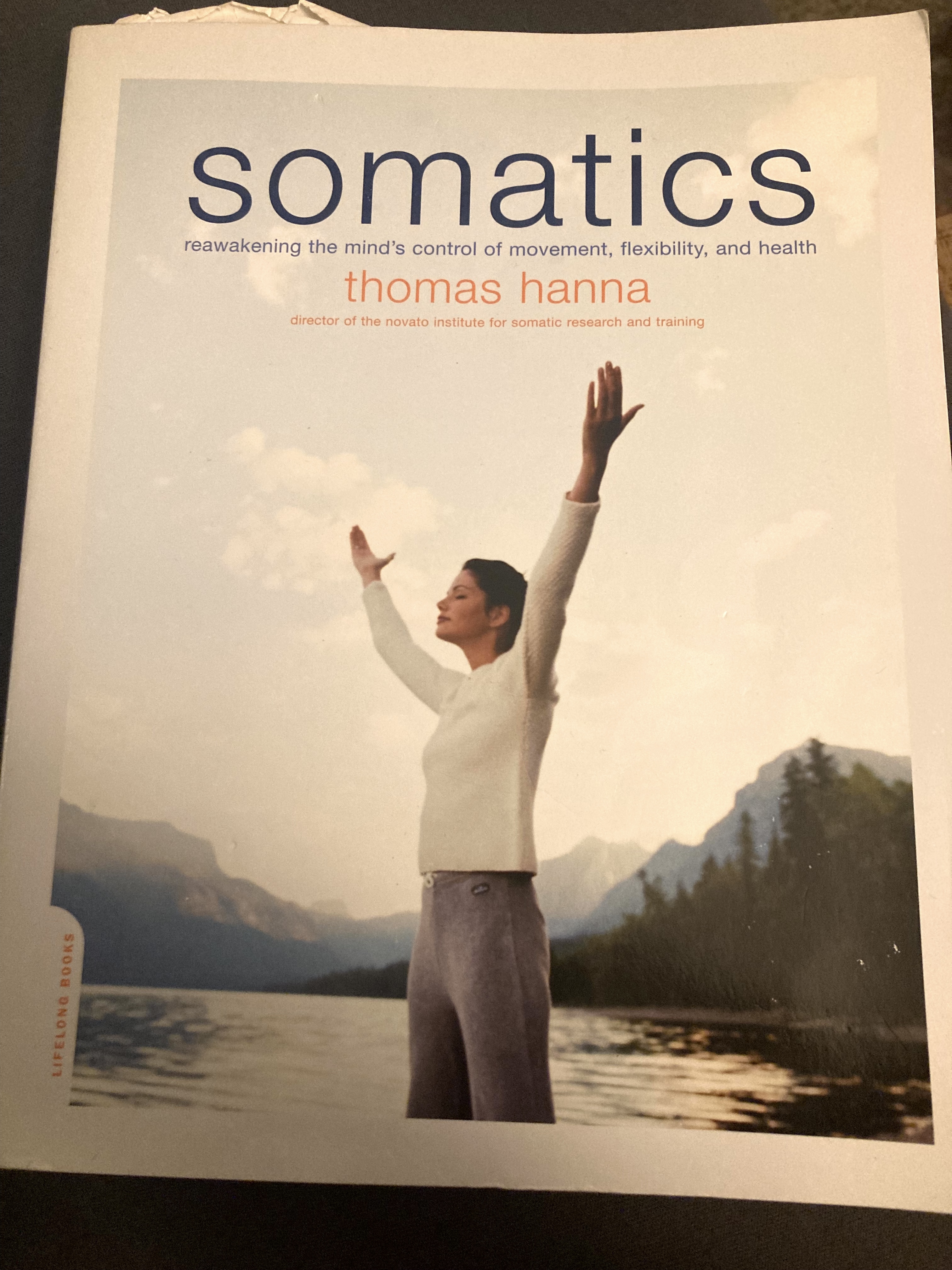
Finding this book was a happy accident. A couple of years ago, I had the blessing to work with a Somatic Coach (Tim Tolliver of Proving Ground Performance) for a few months. This was my first exposure to the field of Somatics, but I must admit I had a very shallow understanding of the topic. Then, on a trip to Friday Harbor with my son Nathan over Labor Day weekend, I wandered into a charming, little used book store and found this book.
It’s an old book, from the 80s, written by Thomas Hanna, the founder of the field of Somatics. Despite its age, the information within is highly relevant and valuable. The basic premise is that most exercises focus on what happens outside the body: the body moving through space, acting upon an object, or being acted upon by outside forces. What we don’t focus on is what is happening inside the body. This book and the exercises within are all about sensory-motor retraining.
I have been performing these exercises every morning for several months now, and I’ve noticed a marked improvement in my own bodily awareness and mobility, especially in my left hip and shoulder (areas of repeated past injury). I have had struggles on my left side going back decades, including injuries all up and down the body, from my left ankle to the left side of my neck. The consequence has been a sort of stiffness and lack of muscle activation along the left side. I’m just weaker and less mobile there, which contributes to re-injury as my symmetrical movement is inhibited (especially in high-intensity or repetitive movements).
Thankfully, the somatic exercises in this book are helping me. I notice the difference in how I stand and walk, and can clearly feel a difference in exercises like the barbell thruster or double kettlebell clean & jerks. Here’s one for the fitness nerds, fully endorsed.
NONFICTION FILM: A CRITICAL HISTORY
By Richard Meran Barsam

I don’t know where this came from, but I like it. It’s a 1971 publication from the Cinema Studies side of the house (my major for a short time in University). I am really racking my brain to figure out where it came from, but I can’t for the life of me. I know it was an accidental find that sat on my shelf for months… maybe from one of those “free libraries” on the side of the road. Yeah, I think that’s it.
This is a very thorough overview of the entire field of non-fiction filmmaking (including documentaries, government propaganda, educational, and corporate-sponsored films) from it’s very inception in the early 20th century right up until 1970. It’s the kind of thing that only a very narrow band of humanity are going to find interesting and want to read. Also, because it reads like a series of film reviews (written by a professional film critic), it can fall into that ‘boring listing stuff’ category. But, within it are gems.
I found a lot of deep insights into the craft of non-fiction filmmaking (which craft I also practice), and was intrigued to learn the history of certain storytelling developments or techniques that I’d always taken for granted. Learning how some of the great non-fiction filmmakers of the past conceptualized and approached their work led to some powerful introspection on my own part.
I took notes from this book, things I want to remember about the philosophy or technique of filmmaking, and lists of films I’d like to watch for research.
Cavalcanti’s 14 points (on documentary filmmaking)
Don’t treat generalized subjects; you can write an article about the mail service, but you must make a film about one single letter.
Don’t depart from the principle which states that three fundamental elements exist: the social, the poetic, and the technical.
Don’t neglect your script or count on luck while shooting. When your script is ready, your film is made; then, when you start to shoot, you begin again.
Don’t trust in the commentary to tell your story; the visuals and the sound accompaniment must do it. Commentary irritates, and gratuitous commentary irritates even more.
Don’t forget that when you are shooting, each shot is part of a sequence and part of a whole; the most beautiful shot, out of place, is worse than the most trivial.
Don’t invent camera angles when they are not necessary; unwarranted angles are disturbing and destroy emotion.
Don’t abuse a rapid rate of cutting; an accelerated rhythm can be as pompous as the most pompous largo.
Don’t use music excessively; if you do, the audience will cease to hear it.
Don’t supercharge the film with synchronized sound; sound is never better than when it is suggestively employed. Complementary sound constitutes the best sound track.
Don’t recommend too many optical effects, or make them too complicated. Dissolves and fades form part of the film’s punctuation; they are your commas and periods.
Don’t shoot too many close-ups; save them for the climax. In a well-balanced film, they ocour naturally: when there are too many, they tend to suffocate and lose their significance.
Don’t hesitate to treat human elements and human relations; human beings can be as beautiful as the other animals, as beautiful as machines in a landscape.
Don’t be vague in your story; a true subject must be told clearly and simply. Nevertheless, clearness and simplicity do not necessarily exclude dramatization.
Don’t lose the opportunity to experiment; the prestige of the documentary film has been acquired solely by experimentation. Without experimentation, the documentary loses its value; without experimentation, the documentary ceases to exist.
Characteristics of “Cinema Verite” (Free Cinema) or “Direct Cinema”
- Impromptu Interviews
- Hand-Held Cameras
- Direct Sound Recording
- Conscious Informality
“An attempt to capture a carefully selected aspect of reality as directly as possible, with a minimum of obstacles between the filmmaker and his subject; to this end, it is unscripted, unrehearsed, and relatively unlimited as to where the persons in the film may move, what they may say, and where they may say it. The camera work is intimate, often giving the viewer the immediate sense that he is “there”; the sound recording is direct, and often clouded by pickup of background noise that lends even more reality; and the editing tends to be continuous, rather than discontinuous, striving for a chronological, rather than dramatic, presentation of events.” – Barsam, ‘Nonfiction Film’, pg. 252
Nonfiction Film Research (Films to Watch)
Nanook of the North
The Land
Lousiana Story
The Negro Soldier
Why We Fight: Prelude to War
Every Day Except Christmas
On the Bowery
Don’t Look Back
Gimme Shelter
Why We Fight: Prelude to War (Frank Capra)
This film tells the rise of the Dragon, the Beast, and the False Prophet (from the Book of Revelations).
Italian Invasion of Ethiopia begins around 45:00
Haile Selassie I’s warning at the League of Nations is at 47:00
 Nic Nakis